

Showing posts with label #pacifistfightclub. Show all posts
Showing posts with label #pacifistfightclub. Show all posts
Friday, January 15, 2016

Wednesday, January 28, 2015
PFC FILM EVENT: "DIRTY WARS"

SATURDAY, FEB. 28TH AT 2PM.
AT FULLER THEOLOGICAL SEMINARY (IRVINE CAMPUS)
THIS IS A FREE EVENT.
Thursday, September 18, 2014
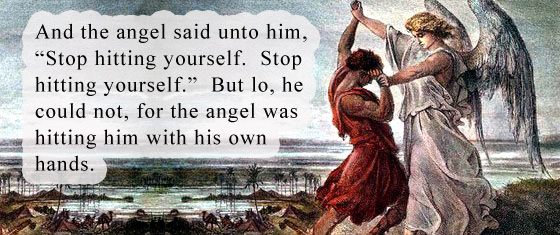
When God Predestines a Fight ... (and you both get a swift knee to the nuts...)
If this won't mess with your theology, I don't know what will. And I'm not just talking to the "Pacifist"-minded in our P.F.C. collective. What do you pray after a match if you sincerely believe God has predestined the outcome of your evange-fight—as if GOD is doing the punching and the kicking—and then it ends like this... (Well, watch the video to find out...)
Kudos to the Fight Church documentary.
Hat tip to Matthew Paul Turner for posting this clip on Twitter.
Tuesday, April 15, 2014
Biggest Threats To U.S. Nuclear Missile Corps:Boredom and Drugs
Every day 90 uniformed men and women in their mid-20s ride elevators 40 to 60 feet below remote fields in Montana, Wyoming, Colorado, North Dakota, and Nebraska in rote preparation for improbable nuclear Armageddon.
But their day-to-day enemy, for decades, has not so much been another superpower, but the unremitting boredom of an isolated posting that demands extreme vigilance, while also requiring virtually no activity, according to accounts by missileers and a new internal review of their work.
The millennials who populate this force can watch television, read, study, or sleep in their cramped, often damp quarters. But their checklist routines are typically unvarying, and their moment-to-moment responsibilities are few, and the temperature underground—like the policy requiring their presence—is unnervingly stuck in the mid-60s.
READ FULL STORY HERE>
They spend some of their 24-hour alerts seated in front of steel Minuteman III missile launch control panels mounted on shock absorbers, with toggle switches capable of hurling 10 to 50 nuclear warheads—each with 20 times the explosive force of the Hiroshima bomb—to the other side of the globe, at speeds of 15,000 mph.
But their day-to-day enemy, for decades, has not so much been another superpower, but the unremitting boredom of an isolated posting that demands extreme vigilance, while also requiring virtually no activity, according to accounts by missileers and a new internal review of their work.
That understandable boredom, when paired with the military’s sky-high expectations for their workplace performance, has pushed some of them to use drugs, others to break the rules, and still more to look for any way out.
The millennials who populate this force can watch television, read, study, or sleep in their cramped, often damp quarters. But their checklist routines are typically unvarying, and their moment-to-moment responsibilities are few, and the temperature underground—like the policy requiring their presence—is unnervingly stuck in the mid-60s.
READ FULL STORY HERE>
Wednesday, March 26, 2014
Tuesday, March 25, 2014
Monday, March 24, 2014
Friday, March 21, 2014
Loving Bin Laden – What Does Jesus Expect Us To Do?

“Do you mind if we blindfold you?” the Hezbollah fighter asked nonchalantly. “If I have a choice, I’d prefer not, but I’m guessing it’s your call,” I replied with a (nervous) smile. For some reason, they simply chose to make me change cars (all black Mercedes) several times on the way to meet with the #2 man in the Lebanese Shi’ite organization.
My two Lebanese Muslim friends and I waited in the hallway of the dark building for about five minutes before someone walked through the door and said “Follow me.” We did, and found ourselves in a room adorned with yellow-and-black Hezbollah flags and big, soft armchairs. And we waited.
It was at this moment when it hit me what we were doing. We were meeting with an enemy of my country.
Probably illegal – I think I had forgotten to check that little detail. (I’m not much for details.) We were surrounded by men with AK-47 machine guns, in an unfamiliar city, in an unknown building, meeting a man I’d never seen, who didn’t know why I was there. Other than that – all was good.
But as soon as our host walked in, I remembered why I was there. He broke into a huge smile as he clasped my hand with both of his and said, “Ahlan WaSahlan” (Welcome). “I’ve heard so much about you,” he continued. Hmmmm? “Heard what, exactly?” I wondered.
It never became clear why he agreed to meet me. Curiosity? To let the West know that the Hezbollah aren’t such bad guys after all? To win me to his point of view – either to Islam or his politics? Not sure. But I decided then and there that I didn’t care and really couldn’t care – otherwise I wouldn’t have come. I knew why I was there: to visibly share the love of Christ with an enemy.
But was he actually my enemy? Did he personally want to harm me? I doubt it. Yet by most definitions he was the enemy of my people, Americans. Maybe even the enemy of Christians. And for sure the enemy of the Israelis. But how could I follow the life and teachings of Jesus of Nazareth to love my enemies if I never met any? So here I was, on a quest to follow Christ. It wasn’t about doing something with or to Muslims. It was about following Jesus.
That day a friendship began. It was a cautious friendship – on both sides. We were equally skeptical of the other’s agenda. But over the years we have become friends. He’s still a Muslim, still the leader of the Hezbollah in all of south Lebanon, still at war with Israel. But he has now received prayer a thousand times, often by the laying on of hands by my Christian pastor friends I take to see him. He has now read the New Testament. We talk often and deeply about the gospel, about big international issues, about the small hidden things of our hearts. He is my friend!
Since the release of Tea with Hezbollah: Sitting at the Enemies’ Table, the most common question posed to me goes like this: “Yeah, I know that Jesus said to love our enemies, but… I mean, you’re not suggesting that… well, you know, we should, like, love Osama bin Laden, are you?”
It’s one thing to ask Western Christians to follow Jesus and point out that one of the things he clearly said, and taught, was to love our enemies. It’s another thing altogether to make that teaching specific with an actual enemy. Like Bin Laden.
The question is a good one: what do we do with our actual, physical enemies (rather than our theoretical enemies), people who might want to kill us if they had the chance? We’re not talking about an ideology or a religion, but a real person, like Bin Laden. What do we do with Bin Laden?
There are three biblical ideas that can help us think clearly about how to treat an actual, literal enemy.
·
Joshua 5:13-14 is the story of the angel who appears to Joshua right before he takes Jericho. Whose side is the angel on? Neither. He is the Commander of the Lord’s army. Understanding that God is on His own side is a great place to start when we think about our enemies. God is neither “for” or “against” America. He is hoping we are on His side, but He’s not on ours.
·
In Luke 6:35 Jesus states, “Love your enemies and do good to them.” Pretty clear. The idea of “doing good” to our enemies is a powerful one. It really “works” to do good to our enemies – as a strategy for overcoming their agenda.
·
In Romans 12:21 the apostle Paul says, “Do not be overcome by evil, but overcome evil with good.” This is a rarely-followed biblical truth – to overcome evil by doing good to the one who is evil. We more naturally think of running from evil – a good strategy at times – but not necessarily fighting evil with the frontal assault of goodness!
I believe that this topic is critical for our age. I doubt that we (“Christians”) have more enemies now than at other times in history, but because of the “flatness” of a globalized world, we simply know about our enemies more than ever before. We see them on the news every day. We are reminded of them several times a day through various sources. So if there was ever an opportunity to fear the enemy, it’s now.
Most Christians are left with only two choices, both political: the more “conservative” route of building a strong military case against our enemies, or the more “liberal” route of favoring diplomacy. (Both are generalizations, of course). But isn’t there a third way that’s actually more powerful, more pragmatic and therefore more effective? How about the way of Jesus? It’s not passive, not wimpy, but instead an incredibly compelling method that moves beyond mere dialogue to actual solutions.
But because politicians, and believers of all stripes, don’t think this way of Jesus is very useful, it’s simply ignored. One of the most interesting aspects of the trip that Ted Dekker and I took was our question to the leaders of the Hezbollah, to Hamas, and to the Bin Laden brothers – what was Jesus’ most famous teaching? Most of them said, “To love your enemies.” We’d then ask the “Dr. Phil” question, “So how’s that goin’ for ya?” To which they’d respond, “Not very well because it’s not practical.” I assured them that unfortunately most of my American friends thought the same.
So basically, few of us really believe that “doing good to our enemies” is actually a strategy to “win.” But Jesus did.
Before I get into some specific suggestions for loving our enemies, let me share the three most common objections I get to this idea:
“It sounds like pacifism, and I believe in the Just War theory.” But I’m not speaking politically. So that argument simply becomes an excuse to not personally follow a direct command of Christ. What the government has to do in order to keep its citizens safe is a great discussion – just not this one.
“It doesn’t take into account that there is real evil in this world and that some Muslims are, in fact, engaging in a Jihad of terrorism against the West.” While I agree that some Muslims have and will engage in clear and horrific acts of terror, it doesn’t follow that we should therefore stop loving our enemies. In fact, this may be the best argument for loving them. Could it be that this is our best, and possibly only, weapon against potential future terrorists? Could it be that if they personally experience the love of Jesus from one of His followers, they would not engage in such activity? Very possibly. I am not naïve. Several times my family and I have been the focus of violent actions by those who bear the label “Muslim.” Evil is real, and it has a root – our one and only Enemy with whom we cannot reconcile – the Devil.
“‘Love’ doesn’t always work against such people.” If we’re using “love” as a strategy to “get them,” then it won’t work. But if we love our enemies because God does, and if our hearts are soft towards them because we see God weeping over them, the effect is direct and powerful.
Love is by far the most powerful and forceful weapon we have at our disposal. It is not wimpy. It’s not naïve. It led to the most violent, non-passive, act in history – the Cross. Love does not roll over and lay down. Love conquers all.
So, if you’re still with me, here are three steps for employing this strategy of Jesus:
Take time to think about who your actual enemies are. It could include an in-law, a physical neighbor, even an enemy of the State – the Bin Laden variety. Then engage that person emotionally and spiritually. In other words, force yourself to think about him or her. Imagine what his or her life is like. Why is he the way he is? Now pray for him. Allow God to begin to place compassion and insight into your heart for that person, and to give you perspective. This is critical if you are going to make it to step two. And, by the way, this first step takes a ton of spiritual maturity on our part. Because, if someone is your enemy, you don’t want to do this. But do it anyway!
2
Begin to ask God for a plan, for a specific strategy for meeting this person and talking to him or her. I didn’t show up at the Hezbollah leader’s office without first taking a lot of time to think, pray and plan how I would do that and what I would say once I was there. If you don’t plan for this, it won’t happen. So make it real. Make it practical. I am currently planning to meet some other high-profile enemies so that I can continue my quest of obeying Jesus in everything. And I pray that I will have the courage and the words to say what God gives me to say when the time comes.
Go across the street. Around the world. But you have to go. It’s not rocket science for a reader like you. I’m guessing you’ve traveled before. You’ve been in cross-cultural situations and gone out of your comfort zone. This is simply one step further. You’re now going to meet an actual enemy.
Think about it. What’s the worse thing that could happen to you? “I could be killed,” you say. But you’re going to die anyway, so seriously, what’s the worst thing? I think the worst thing is this – you fly halfway around the world to meet “Mr. Bad Guy,” and you show up at his doorstep, and he isn’t there to meet you.
In that case, you wander around a bit and come back the next day. If he never shows up, you’ve had a good time of prayer and maybe have made some new, unexpected friends. Not so bad, really!
Oh, and by the way, the last time I was having tea with the Hezbollah, here’s what I said: “Have you ever thought about employing the strategy of Jesus in relation to Israel? It’s simple, has immediate impact and can be done unilaterally. You can do it right now, all by yourself. You can forgive them. Love them. Start doing good things to them. Bless them. Pray for them. It will annoy and confuse them as much as anything else you’ve ever done. What do you think?”
The Hezbollah leader’s reply? “Carl, Carl, Carl. I know this is the way of Jesus, but it won’t work with them.
They will simply abuse this kind of niceness, and then where will we be?”
Undeterred, I asked, “So how is your current strategy working? I mean, what do you have to lose?”
He looked down and said, “You know, I’m not sure I have the courage to do this. It might cost me everything.”
“Thank you for your honesty, sir,” I said. “It cost Jesus everything, too.”
Then we prayed. We gathered around him and prayed. We prayed for wisdom. For courage. For honor. For him to do the right thing, the thing Jesus would do.
And, well, who knows? It just might work.
Because in this case, the “it” is Jesus!
Reposted from http://www.missionfrontiers.org/
Thursday, March 20, 2014
The Recruits by David Wood
[EXCERPTED FROM THE 3 PART SERIES AT HUFFINGTON POST]
READTHE FULL STORY HERE>
**
Is she comfortable with her son becoming a warfighter, with American troops still being killed in Afghanistan and trouble brewing elsewhere in the world? “Oh, we prayed about it and he prayed about it – he knew it was what God wanted,” she said. “We are good with that.”
It’s a proud and painful scene to watch, for it’s clear that there will be more wars, and that there will always be young Americans eager to sign up to fight. In three months, these recruits have earned the right to be called Marines. More training will come later. But there is no way, really, to prepare them for the emotional extremes of war: trauma for some, including moral injury, a violation of the sense of right and wrong that leaves a wound on the soul.
“You just can’t communicate the knowledge of war to somebody else. It’s something that you know or don’t know, and once you know it you can’t un-know it and you have to deal with that knowledge,” explained Stephen Canty, a thoughtful 24-year-old who went through boot camp here in 2007, before his two combat deployments to Afghanistan.
**
All this may sound like the moral ideals by which most Americans strive to live. But the military’s moral codes are different: They are issued to each recruit along with a weapon and the training, and eventually the authorization, to kill. Success on the battlefield may call for the suspension of basic notions of civilian morality in order to accomplish the mission. Thus the military codes add dimensions of loyalty, duty and personal courage, and back up those values with a requirement of rigid and unquestioning discipline and obedience to lawful orders. The Army’s Soldier’s Creed demands that troops “always place the mission first.”
The entire military is “a moral construct,” said retired VA psychiatrist and author Jonathan Shay. In his ground-breaking 1994 study of combat trauma among Vietnam veterans, Achilles in Vietnam, he writes: “The moral power of an army is so great that it can motivate men to get up out of a trench and step into enemy machine-gun fire.”
The military’s moral structure is intended to help guide troops through “morally ambiguous situations,” said Marine Col. Daniel J. Haas, who commands the recruit training regiment here.
**
During
a gun battle outside Marjah, Afghanistan, in early spring of 2010, a Marine
squad of Charlie Company, 1st Battalion 6th Marines (“Charlie One-Six”), was
pinned down in a gully, taking intense fire from an adobe compound. Unable to
move forward or to retreat, the squad leader OK’d an attack and Lance Cpl.
Joseph Schiano, a 22-year-old on his second combat tour, lifted a rocket
launcher to his shoulder, took aim and fired.
The
blast blew apart much of the adobe building. As the dust settled, the Marines
could hear shouting and wailing. Their interpreter said, “They want to bring
out the wounded.” And as the torn and bleeding bodies were dragged out, it
became clear that the Taliban had herded women and children into the building
as human shields.
“And Schiano is leaning against wall, just sobbing,” recalled Canty, who was Schiano’s squadmate at the time. “The thing is, you couldn’t have known.”
But as Canty himself often says, once you know the truth of war, you can’t un-know it. After that tour in Afghanistan, Schiano left the Marine Corps and went home to Connecticut. The war still weighed heavily on him. He couldn’t fit back. Daytimes, he felt he didn’t belong. At night, he had screaming nightmares.
One Sunday afternoon several weeks after he returned, Schiano went off the road in his 2003 Volkswagen Jetta and rammed a utility pole. At his funeral in Riverside, Conn., Marines of One-Six carried the casket. He was 23 years old.
**
“The bright line between murder and legitimate killing is something that our most junior enlisted person cares deeply about. When they kill somebody who didn’t need to be killed, they are really wounded themselves.”- Dr. Jonathan Shay, retired VA psychiatrist
**
Canty’s little brother, Joe, joined the Marines in 2010 and recently deployed to Afghanistan. “I know what he’s getting into; he’s going back to Helmand Province less than 20 miles from where I was, and he’s got a grin ear to ear,” Stephen said. “And there’s nothing I can do to wipe that grin off his face because, that was me, you know? Three years earlier. Nobody could have told me.”
READTHE FULL STORY HERE>
Wednesday, March 19, 2014
When Charles Finney Meets Smith & Wesson

A friend of mine is a deputy game warden and generally pretty negative about Christianity. He and I have some great talks. He'll admit he likes talking to me but will also admit he doesn't think much of most Christians.
At one point he was invited to a talk. A guy that had been a Big Game guide and former game warden was giving a talk at a local church building. There was a free dinner and a talk. My friend went. He was interested in hearing the talk and getting the free meal. He related this to me not long after.
He was confused because suddenly the talk about turkeys, deer and bear shifted gears. It had been used as a kind of a bizarre segue to a gospel presentation. My friend was pretty irritated, no longer wanted to be there and felt like he had been tricked. I assured him he had been.
For years we theological conservatives have joked about how these goofy 'churches' should just offer free beer. That will certainly get some people to come and visit.
Well apparently it's now being tried with guns. This has been going on for some time but this story is helpful because it gives us a little window into that world. This is Finney's system reaching its telos, its ultimate and extreme end. It can't go much further. I hope I don't eat my words.
But there's something else going on here too. This isn't just Finney.
The United States was birthed in armed revolution, a fight over taxes and tyrannical government. Those who are trying to argue the reasons for 1776 were over religious freedom have been deceived or are lying themselves.
The Christians who refused to go along were persecuted and many fled to Canada as Loyalists. I believe a branch of my family was part of this group. They settled in Coburg Canada but by the 1850's had changed their mind and moved to Cook County Illinois which at the time was still rural farm country. Later they went west.
Another branch of my family fought in the American Revolution. In fact my GGGGGG-grandfather fought in the French and Indian War and then (when quite a bit older) in the Rebellion of 1776. All of his sons also fought in the war and afterward they moved from the Carolinas down to Georgia and as soon as the Louisiana Purchase opened up they wandered into the Ozarks where they stayed until The Great Depression.
I only say this to make it clear that I have family on all sides. The Civil War too. My own heritage would be enough to make some burst with pride, but also (and rightly) a good deal of shame. But I have no loyalties apart from Zion.
The Christian Meta-Narrative...the story applied to the history... is that America is a Christian Nation, blessed by God and formed by His Providence.
Of course it was Providential, so was the Mongol Empire of Genghis Khan. That doesn't mean it was sanctified. But in the American narrative, God had a 'special' plan for the fledgling United States.
The Founders became almost-but-not-quite Saints in a kind of Nationalist religion... which makes sense if you believe the nation was a kind of New Israel. Many nations have done this. England, Scotland, and South Africa are just a few that come to mind. It seems rather silly and sometimes obscene when the narrative is claimed by other nations, but we seem to miss that when we apply it to America.
The documents that formed the ideology of the new nation were venerated as almost-but-not-quite inspired by God. Some go all the way and admit they do believe they were inspired. Though it's a grievous heresy it is tolerated by many churches.
Basically the notion of armed revolt has been given theological legitimacy. This is critical to understanding the Christian spin on gun culture. The theology is spurious but it is born of the narrative. It is viewed almost in terms similar to that of a holy crusade.
During the Clinton years the country was greatly stirred, perhaps even more than the opening years of the Obama administration. I think some people have forgotten how upset people were to see the changing of the guard. The World War II generation had passed and the Boomer president was dancing on the stage to Fleetwood Mac. He was perceived as the marijuana smoking, draft dodging womanizer who came out of the gate trying to allow gays to be in the military and pass legislation leading to socialized medicine. To make it worse he had his feminist wife lead the legislative charge.
The Ruby Ridge incident had occurred during the last months of the Bush administration but it was fresh in the minds of many on the Right. Then came Waco, followed by the Brady Bill, then the Assault Weapons Ban. The Militia movement was in high gear. Whether or not Janet Reno is a lesbian she was perceived as such and it seemed to many on the Right that the Cold War had been lost...Communists and the New World Order had taken over. The UN army was coming. Clinton proved the coward in Somalia and people were suspicious of his facilitating the deal between Israel and the PLO. The Anti-Abortion movement was in full swing. Reagan and Bush had failed them and now with Clinton in office abortion doctors started to die. Does anyone remember Paul Hill?
Then Oklahoma City happened followed by Eric Rudolph and the Olympic bombing in Atlanta, and then more bombings at abortion clinics. The Montana Freemen prepared for war.
To the rest of the world the New World Order meant an American Empire, Neo-Feudalism, theft and murder through Globalization. Wall Street surged as the technological revolution led to rapid growth and speculation, which only empowered the new transnational corporations which were wedded to American power. The Left battled in Seattle but to the Right, Globalization was a plot to undermine America. Their country had been overtaken by minorities, gays, and multi-culturalism. A One World Government and Religion were on the near horizon.
Rush Limbaugh went from a star to a super-star. The end of America was predicted, people were buying guns and getting gold. I remember those days very well.
The Second Amendment got a boost and has ever since been an issue that stirs deep passions. During the Bush years the energies were focused elsewhere (the perceived threat of Islamic invasion and sleeper cells) but all those forces which lay dormant from the 1990's were reborn during the summer of 2009.
These churches are playing on these fears and emotions. They've used them (sacrilegiously) as a tie-in with the gospel message. They're using them to lure angry people into the church...and for what?
The reality is that the American Revolution is not justifiable in light of Scripture. There's no basis for the taking up of arms against George III. He many have been a scoundrel...most kings were. But if Paul could instruct the Church as he did in Romans 13 and call even the horrid government of Nero a 'good'...then what happened in 1776 was sin.
Rome used taxes to fund their military conquests and build temples to pagan gods. This was known and yet the Church is instructed to pay the taxes and as much as is possible, obey the laws. We won't embrace their ideas about citizenship. We'll speak the truth even if it upsets them, but we're never told to refuse to pay taxes and there's no basis for armed revolt. Those who advocate these views are in sin.
The problem on a basic level is a misunderstanding and/or rejection of the Bible's concept of the Kingdom in this age and our calling as a Church.
Of course if I'm right that destroys the whole narrative...the whole religion that has been created. And let me assure you, people are far more passionate about 1776 than they are about Jesus Christ. Insulting the Rebellion will get you physically attacked and much quicker than someone insulting the Church of Christ.
Monday, March 17, 2014
NO JUST WAR: Daniel Berrigan
"I think the term Just War should be removed from the Christian vocabulary. No modern war can be just, because it’s indiscriminate and because it’s launched against the people and the world. We should be getting back to the Gospels and Christ’s teaching on violence. On this point Jesus is unequivocal, when he criticises those with hatred in their hearts. Man is at war with the global ecosystem and with his fellow man, and I denounce it." - Fr. Daniel Berrigan
Saturday, March 15, 2014
PHOTOS: PACIFIST FIGHT CLUB - ROUND 4


Dr. Thomas Crisp shares how Gandhi may have been the greatest disciple of Jesus in the Twentieth Century.


We're already gearing up for Round 5 in May or June.

Wednesday, March 12, 2014
Maximilian of Thavaste
Maximilian, the son of a Roman soldier in present-day Algeria, was required to join the army at the age of twenty-one.
Before the court of the Roman proconsul Dion, Maximilian testified, “I cannot enlist for I am a Christian. I cannot serve, I cannot do evil.” He was a soldier for Christ which meant he could not fight the wars of man. He insisted that we can die for Christ, but we cannot kill for him.
Because of his refusal he was beheaded.
[Shared from a post by Shane Claiborne]
Before the court of the Roman proconsul Dion, Maximilian testified, “I cannot enlist for I am a Christian. I cannot serve, I cannot do evil.” He was a soldier for Christ which meant he could not fight the wars of man. He insisted that we can die for Christ, but we cannot kill for him.
Because of his refusal he was beheaded.
[Shared from a post by Shane Claiborne]
Friday, February 14, 2014
Choose Love, Not War — Just like St. Valentine!
Over at RedletterChristians.org, Shane Claiborne recounts the legends of our favorite cupid of a saint, the V-man himself. No, not that one—St. Valentine!

Among the countless tales of the Roman saint are testimonies of his subversive resistance to Roman empirical wargames by "marrying young couples preventing the men from going to war."
The rest of what Shane tells is the story where giving valenties comes from, and it's well worth the (quick) read. See it all here. [Spoiler Alert: It involves acting like Jesus]
And remember, when you bite into that cheap chocolate heart, you've got this subversive, war-resistant, enemy-loving Saint to thank.
subversively
marrying young couples preventing the men from going to war - See more
at:
http://www.redletterchristians.org/happy-saint-valentines-day/#sthash.rw34qWCn.dpuf
subversively
marrying young couples preventing the men from going to war - See more
at:
http://www.redletterchristians.org/happy-saint-valentines-day/#sthash.rw34qWCn.dpuf
subversively
marrying young couples preventing the men from going to war - See more
at:
http://www.redletterchristians.org/happy-saint-valentines-day/#sthash.rw34qWCn.dpuf
subversively
marrying young couples preventing the men from going to war - See more
at:
http://www.redletterchristians.org/happy-saint-valentines-day/#sthash.rw34qWCn.dpuf
subversively
marrying young couples preventing the men from going to war - See more
at:
http://www.redletterchristians.org/happy-saint-valentines-day/#sthash.rw34qWCn.dpuf
subversively
marrying young couples preventing the men from going to war - See more
at:
http://www.redletterchristians.org/happy-saint-valentines-day/#sthash.rw34qWCn.dpuf
Tuesday, January 14, 2014
Stunning Snapshots of Peace in Times of War

Songs of Peace | Kiev, Ukraine: "The 2013 protests were shrouded with violence from both sides, including 200 protesters who commandeered a digger and attacked the presidential palace. The protests and riots followed the Government’s decision to side with Russia rather than the European Union."


Mirrored Reflections | Georgia, USA: "The young child in KKK attire became famous when this image hit the presses because of the way that it showed the innocence of children. Although the child is only known by his first name, Josh, the photographer and trooper met in 2012, 20 years after the image was taken."


War and violence are universal, but so is the beauty of peace.
[For more on these and other inspiring photos, visit this link. Hat Tip to PFC Fighter, Jeff Partain for the link.]
Wednesday, December 25, 2013
MERRY CHRISTMAS. WAR IS ABOLISHED! BY BRIAN ZAHND
Isaiah had a dream, a God-inspired dream.
Isaiah was a poet, a God-intoxicated poet.
He had a Messianic dream that he turned into a prophetic poem.
It goes like this—
In days to come
the mountain of the LORD’s house
shall be established as the highest of the mountains,
and shall be raised above the hills;
all the nations shall stream to it.
Many peoples shall come and say,
“Come, let us go up to the mountain of the LORD,
to the house of the God of Jacob;
that he may teach us his ways
and that we may walk in his paths.”
For out of Zion shall go forth instruction,
and the word of the LORD from Jerusalem.
He shall judge between the nations,
and shall arbitrate for many peoples;
they shall beat their swords into plowshares,
and their spears into pruning hooks;
nation shall not lift up sword against nation,
neither shall they learn war anymore.
-Isaiah 2:2–4
Swords turned into plowshares.
Spears into pruning hooks.
Tanks turned into tractors.
Missile silos into grain silos.
The study of war abandoned for learning the ways of the Lord.
Instead of academies where we learn to make war,
there will be universities where we learn to wage peace.
The cynic will laugh (for lack of imagination), but this is Isaiah’s vision.
And every Christmas we borrow another of Isaiah’s poems to celebrate the birth of the child who makes these dreams come true—
The people who walked in darkness
have seen a great light;
those who live in a land of deep darkness—
on them light has shined…
For all the boots of the tramping solidiers
and all the uniforms stained in blood
shall be burned as fuel for fire.
For unto us a child is born,
unto us a son given;
the government shall be upon his shoulders;
and he is named
Wonderful Counselor, Mighty God,
Everlasting Father, Prince of Peace.
His government shall grow continually,
and there shall be endless peace
for the throne of David and his kingdom.
He will establish and uphold it
with justice and with righteousness
from this time onward and forevermore.
-Isaiah 9:2, 5–7
Isaiah in his prophetic poems frames the Messianic hope like this:
A Prince of Peace will establish a new kind of government, a government characterized by ever-increasing peace. Weapons of war will be transformed into instruments of agriculture. At last the nations will find their way out of the darkness of endless war into the light of God’s enduring peace.
This is Isaiah’s hope. Christians take Isaiah’s hope and make a daring claim: Jesus is that Prince of Peace! Jesus is the one who makes Isaiah’s dreams come true. From the day of Pentecost to the present this is what Christians have claimed.
But then a doom-obsessed dispensationalist performs an eschatological sleight of hand and takes the hope away from us. On one hand they admit that Jesus is the Prince of Peace who has come, but on the other hand they say his peace is not for now…it’s only for when Jesus comes back again. Bait and switch. Yes, swords are to become plowshares…but not today. For now plowshares become swords; but in our day, it’s war, war, war! They abuse Jesus’ prediction of the destruction of Jerusalem in the first century by always applying it to the latest contemporary geopolitical events. They replace the hope of peace with an anticipation of war! They find a way to make war a hopeful sign.
Think about that for a moment! And here is the worst irony: It was precisely because Jerusalem failed to recognize Jesus as Isaiah’s Prince of Peace right there and then, that they rushed headlong into a war that ended with their own destruction!
End-time prophecy “experts” keep trying to force the same mistake on us in our day. We should refuse. I am a conscientious objector to the doom-obsessed, hyper-violent, war-must-come, pillage-the-Bible-for-the-worst-we-can-find eschatology of Hal Lindsey and his tribe. We must reject that kind of warmongering misinterpretation of Scripture. Jesus doesn’t call us to give a “prophetic interpretation” to the latest war and rumor of war. Jesus calls us to be peacemakers and lead the way out of the darkness of retributive violence into the light of Christian reconciliation. But we haven’t done a very good job of it. So it’s time we started believing what we say every Christmas:
The Prince of Peace has come!
Isaiah says that in the last days the nations will come to Mount Zion and learn the peaceful ways of the Lord. That’s when weapons of war will become implements of agriculture. Well, let’s believe it! The Apostle Peter said on the day of Pentecost that the last days have arrived. (see Acts 2:14f) The writer of Hebrews said that in Christ we have come to Mount Zion. (see Hebrews 12:22f) Obviously, with the passing of two thousand years it should be clear that Peter didn’t mean the end of time was imminent, rather he meant exactly what Jesus himself had been saying — that the waiting was over, the time was fulfilled, and all that the prophets had foretold was coming to pass in the present. The writer of Hebrews means that what Isaiah and the other Hebrew prophets had described as the nations flowing to Mount Zion to learn the way of peace has been inaugurated with the death, burial, and resurrection of Christ.
Let me say it clearly: If you are waiting for something to happen before you beat your sword into a plowshare and your spear into a pruning hook, you can stop waiting! If you confess that Jesus is the Prince of Peace foretold by the prophets, you can start being a peacemaker…today! You don’t need to wait for anything else. You shouldn’t wait for anything else!
As followers of the Prince of Peace are we ready to bid farewell to Mars? We must be. The god of war has had his day. His day ended on the first Easter. In his death and resurrection, Christ has abolished war. Christ made it clear on the cross that war will no longer be the way the world is transformed. The cross exposes the use of violent force as a shameful practice to be renounced. Yes, Jesus has abolished war. The King of Kings won his kingdom without war. Jesus proved there is another way.
Jesus is the other way. The question, “what are you willing to die for?” is not the same question as “what are you willing to kill for?” Jesus was willing to die for that which he was unwilling to kill for.
Jesus won his kingdom by dying, not killing. Ruling the world by killing was buried with Christ.
When Christ was raised on the third day he did not resurrect war. With his resurrection the world is given a new trajectory, an eschatology toward peace.
Merry Christmas!
War is over!
BZ
READ THE FULL ARTICLE HERE>
Isaiah was a poet, a God-intoxicated poet.
He had a Messianic dream that he turned into a prophetic poem.
It goes like this—
In days to come
the mountain of the LORD’s house
shall be established as the highest of the mountains,
and shall be raised above the hills;
all the nations shall stream to it.
Many peoples shall come and say,
“Come, let us go up to the mountain of the LORD,
to the house of the God of Jacob;
that he may teach us his ways
and that we may walk in his paths.”
For out of Zion shall go forth instruction,
and the word of the LORD from Jerusalem.
He shall judge between the nations,
and shall arbitrate for many peoples;
they shall beat their swords into plowshares,
and their spears into pruning hooks;
nation shall not lift up sword against nation,
neither shall they learn war anymore.
-Isaiah 2:2–4
Swords turned into plowshares.
Spears into pruning hooks.
Tanks turned into tractors.
Missile silos into grain silos.
The study of war abandoned for learning the ways of the Lord.
Instead of academies where we learn to make war,
there will be universities where we learn to wage peace.
The cynic will laugh (for lack of imagination), but this is Isaiah’s vision.
And every Christmas we borrow another of Isaiah’s poems to celebrate the birth of the child who makes these dreams come true—
The people who walked in darkness
have seen a great light;
those who live in a land of deep darkness—
on them light has shined…
For all the boots of the tramping solidiers
and all the uniforms stained in blood
shall be burned as fuel for fire.
For unto us a child is born,
unto us a son given;
the government shall be upon his shoulders;
and he is named
Wonderful Counselor, Mighty God,
Everlasting Father, Prince of Peace.
His government shall grow continually,
and there shall be endless peace
for the throne of David and his kingdom.
He will establish and uphold it
with justice and with righteousness
from this time onward and forevermore.
-Isaiah 9:2, 5–7
Isaiah in his prophetic poems frames the Messianic hope like this:
A Prince of Peace will establish a new kind of government, a government characterized by ever-increasing peace. Weapons of war will be transformed into instruments of agriculture. At last the nations will find their way out of the darkness of endless war into the light of God’s enduring peace.
This is Isaiah’s hope. Christians take Isaiah’s hope and make a daring claim: Jesus is that Prince of Peace! Jesus is the one who makes Isaiah’s dreams come true. From the day of Pentecost to the present this is what Christians have claimed.
But then a doom-obsessed dispensationalist performs an eschatological sleight of hand and takes the hope away from us. On one hand they admit that Jesus is the Prince of Peace who has come, but on the other hand they say his peace is not for now…it’s only for when Jesus comes back again. Bait and switch. Yes, swords are to become plowshares…but not today. For now plowshares become swords; but in our day, it’s war, war, war! They abuse Jesus’ prediction of the destruction of Jerusalem in the first century by always applying it to the latest contemporary geopolitical events. They replace the hope of peace with an anticipation of war! They find a way to make war a hopeful sign.
Think about that for a moment! And here is the worst irony: It was precisely because Jerusalem failed to recognize Jesus as Isaiah’s Prince of Peace right there and then, that they rushed headlong into a war that ended with their own destruction!
End-time prophecy “experts” keep trying to force the same mistake on us in our day. We should refuse. I am a conscientious objector to the doom-obsessed, hyper-violent, war-must-come, pillage-the-Bible-for-the-worst-we-can-find eschatology of Hal Lindsey and his tribe. We must reject that kind of warmongering misinterpretation of Scripture. Jesus doesn’t call us to give a “prophetic interpretation” to the latest war and rumor of war. Jesus calls us to be peacemakers and lead the way out of the darkness of retributive violence into the light of Christian reconciliation. But we haven’t done a very good job of it. So it’s time we started believing what we say every Christmas:
The Prince of Peace has come!
Isaiah says that in the last days the nations will come to Mount Zion and learn the peaceful ways of the Lord. That’s when weapons of war will become implements of agriculture. Well, let’s believe it! The Apostle Peter said on the day of Pentecost that the last days have arrived. (see Acts 2:14f) The writer of Hebrews said that in Christ we have come to Mount Zion. (see Hebrews 12:22f) Obviously, with the passing of two thousand years it should be clear that Peter didn’t mean the end of time was imminent, rather he meant exactly what Jesus himself had been saying — that the waiting was over, the time was fulfilled, and all that the prophets had foretold was coming to pass in the present. The writer of Hebrews means that what Isaiah and the other Hebrew prophets had described as the nations flowing to Mount Zion to learn the way of peace has been inaugurated with the death, burial, and resurrection of Christ.
Let me say it clearly: If you are waiting for something to happen before you beat your sword into a plowshare and your spear into a pruning hook, you can stop waiting! If you confess that Jesus is the Prince of Peace foretold by the prophets, you can start being a peacemaker…today! You don’t need to wait for anything else. You shouldn’t wait for anything else!
As followers of the Prince of Peace are we ready to bid farewell to Mars? We must be. The god of war has had his day. His day ended on the first Easter. In his death and resurrection, Christ has abolished war. Christ made it clear on the cross that war will no longer be the way the world is transformed. The cross exposes the use of violent force as a shameful practice to be renounced. Yes, Jesus has abolished war. The King of Kings won his kingdom without war. Jesus proved there is another way.
Jesus is the other way. The question, “what are you willing to die for?” is not the same question as “what are you willing to kill for?” Jesus was willing to die for that which he was unwilling to kill for.
Jesus won his kingdom by dying, not killing. Ruling the world by killing was buried with Christ.
When Christ was raised on the third day he did not resurrect war. With his resurrection the world is given a new trajectory, an eschatology toward peace.
Merry Christmas!
War is over!
BZ
READ THE FULL ARTICLE HERE>
Tuesday, December 17, 2013
WW2: Worse Than You Remember
The Japanese military during the 1930s and 1940s is often compared to the military of Nazi Germany during 1933–45 because of the sheer scale of suffering. Much of the controversy regarding Japan's role in World War II revolves around the death rates of prisoners of war and civilians under Japanese occupation. Historian Chalmers Johnson has written that:
It may be pointless to try to establish which World War Two Axis aggressor, Germany or Japan, was the more brutal to the peoples it victimised. The Germans killed six million Jews and 20 million Russians (i.e. Soviet citizens); the Japanese slaughtered as many as 30 million Filipinos, Malays, Vietnamese, Cambodians, Indonesians and Burmese, at least 23 million of them ethnic Chinese. Both nations looted the countries they conquered on a monumental scale, though Japan plundered more, over a longer period, than the Nazis. Both conquerors enslaved millions and exploited them as forced labourers—and, in the case of the Japanese, as (forced) prostitutes for front-line troops. If you were a Nazi prisoner of war from Britain, America,Australia, New Zealand or Canada (but not the Soviet Union) you faced a 4% chance of not surviving the war; (by comparison) the death rate for Allied POWs held by the Japanese was nearly 30%.
According to the findings of the Tokyo Tribunal, the death rate among POWs from Asian countries, held by Japan was 27.1%. The death rate of Chinese POWs was much higher because—under a directive ratified on August 5, 1937 by Emperor Hirohito—the constraints of international law on treatment of those prisoners was removed. Only 56 Chinese POWs were released after the surrender of Japan. After March 20, 1943, the Japanese Navy was under orders to execute all prisoners taken at sea.
Monday, December 16, 2013
Who Needs A Gun?

[EXCERPTS FROM THE ARTICLE AT OPINIONATER BY GARY GUTTING]
FULL ARTICLE HERE>
Our discussions typically start from the right to own a gun, go on to ask how, if at all, that right should be limited, and wind up with intractable disputes about the balance between the right and the harm that can come from exercising it. I suggest that we could make more progress if each of us asked a more direct and personal question: Should I own a gun?
Finally, there’s the idea that citizens need guns so they can, if need be, oppose the force of a repressive government. Those who think there are current (or likely future) government actions in this country that would require armed resistance are living a paranoid fantasy. The idea that armed American citizens could stand up to our military is beyond fantasy.
Once we balance the potential harms and goods, most of us — including many current gun owners — don’t have a good reason to keep guns in their homes. This conclusion follows quite apart from whether we have a right to own guns or what restrictions should be put on this right. Also, the conclusion derives from what makes sense for each of us as individuals and so doesn’t require support from contested interpretations of statistical data.
I entirely realize that this line of thought will not convince the most impassioned gun supporters, who see owning guns as fundamental to their way of life.
It’s one thing to be horrified at gun violence. It’s something else to see it as a meaningful threat to your own existence. Our periodic shock at mass shootings and gang wars has little effect on our gun culture because most people don’t see guns as a particular threat to them. This is why opposition to gun violence has lacked the intense personal commitment of those who see guns as essential to their safety — or even their self-identity.
READ THE FULL ARTICLE ONLINE HERE>
Doesn't Violence in the OT Mean Pacifism Isn't Biblical?
By Nathan R. Hale
A common objection to Christian non-violence is often articulated as follows:
A unified view of Scripture demands we accept justified violence based on the Old Testament. It takes unnecessarily complex hermeneutics to wiggle out of the fact that God both commands war (the invasion of Canaan) and instituted laws for self defense and capital punishment in the Mosaic Law.
A close look reveals this isn’t true.
On the national front, we have in the Old Testament a defined nation-state (Israel) that is being directly used by God to punish surrounding people groups and nations. This is holy war (commanded by God) and is restricted to Israel.
In the NT, however, Jesus reveals to us through the Apostle Paul that God’s chosen people is no longer a single nation-state, but rather a gathering people across national/ethnic boundaries whose fight is not against flesh and blood (cf. Eph. 6:12; Gal. 3:38).
The battle lines and purposes have been redrawn.
READ FULL POST HERE>
Subscribe to:
Posts (Atom)